
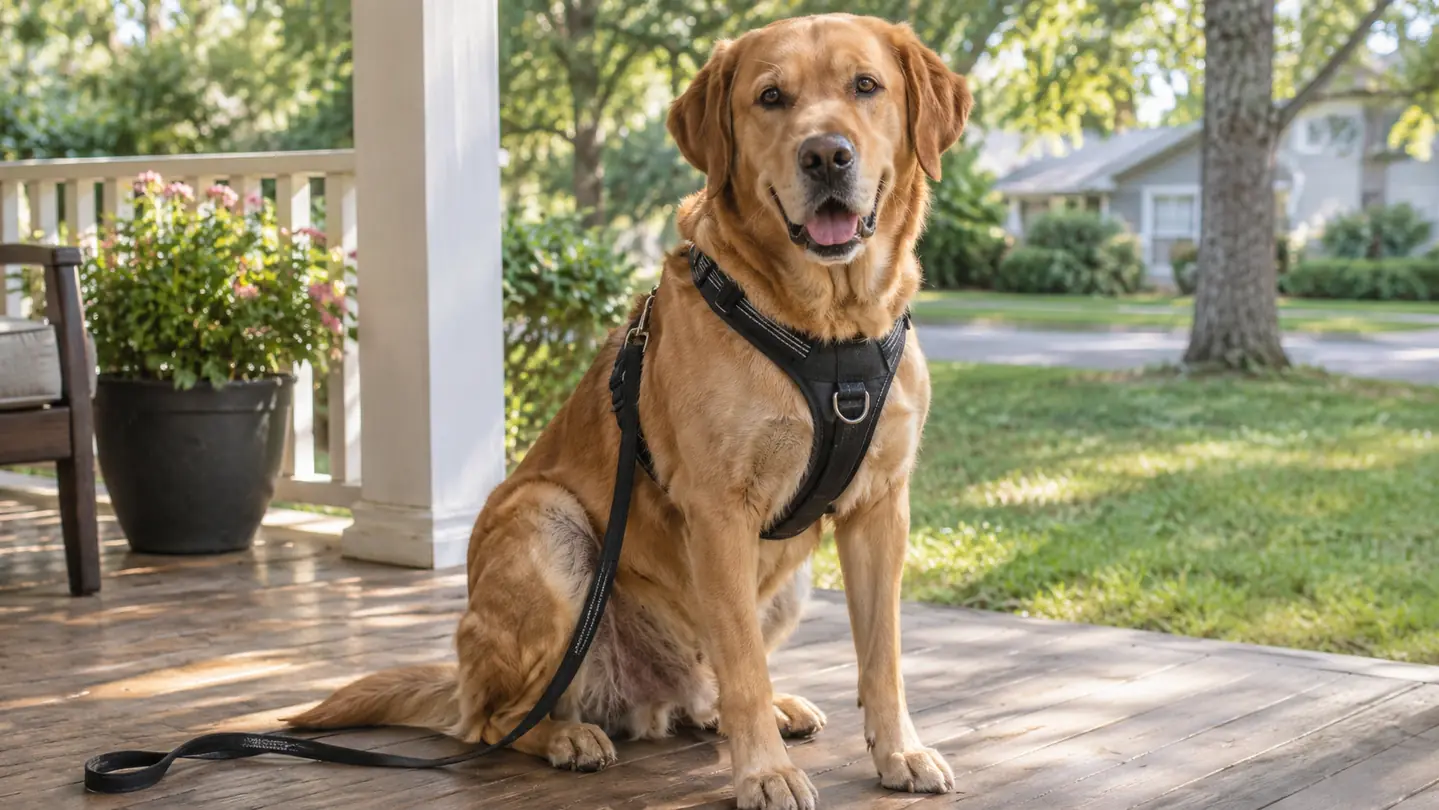
Two winters ago, Murphy pulled me off balance on an icy sidewalk. He is a 72-pound yellow Labrador mix, six years old, and a squirrel on the other side of the street was more interesting than I was. I landed on one knee and kept hold of the leash. That afternoon I ordered the rabbitgoo No-Pull Harness in size Large. I have used it for about 14 months now, twice a day, roughly two miles a day, almost always on the front chest clip. This is the honest version: what it does, what it does not do, and the handful of things I wish someone had told me before I clipped it on.
I am 61, retired from the school library, and not looking for gear that promises to train my dog for me. I want to walk Murphy around the cul-de-sac without my shoulder aching. I want Dale to be able to take him out when I am in the back room with a quilt on the frame. I want a harness that holds up to mud, hair, and a dog who believes every hedge hides a friend. That is the standard I used here.
The Quick Verdict
A well-made steering tool that made our walks safer, not a training shortcut. Buy it for the fit and the two leash clips, not because you think it will turn a puller into a saint.
Amazon Check Today's Price →The harness that kept me upright on the ice
If your dog is strong enough to take you off your feet, the front attachment is the part that matters. That is what earned the rabbitgoo a hook by my door.
Amazon Check Availability on Amazon →What Nobody Tells You About No-Pull Harnesses
The first thing nobody tells you is that a no-pull harness does not stop the pull. It redirects it. When Murphy lunges, the front clip turns his chest toward me. That gives me a beat to shorten the leash and get his attention. The wanting is still there. The harness just makes the wanting easier to manage. Anyone who promises a harness will cure pulling is selling equipment as if it were obedience school.
The second thing is fit. The rabbitgoo size Large is listed for a chest of 17 to 33.4 inches and a weight range of 15 to 45 kg. Murphy is 72 pounds, and his chest measured about 31 inches when I bought it. That put him near the top of the range, which is why I spent a week adjusting the four straps. A harness that is too loose slides and rubs. One that is too tight restricts the shoulders. The measurement matters more than the weight on the listing.
The third thing is that the front clip changes how you hold the leash. I had used a flat nylon collar for years. With a collar, Murphy pulled from his neck, and I pulled back. With the front clip, the leash sits lower and across his chest. I had to get used to holding it with a little slack and steering rather than yanking. If you keep a tight leash out of habit, the harness will feel like it is fighting you for the first week.
The fourth thing is that putting it on takes practice. The buckle closure is secure, but a wiggly dog makes the first few tries interesting. Murphy learned to sit for it after a couple of weeks. Dale still calls it the coat. I call it the harness. Either way, this is not a piece of gear you fling on while the dog is spinning at the door.
The fifth thing, and the one I would put on a sticky note on the fridge, is that the harness is only half the system. The other half is you, holding a loose leash and turning your body. I learned that at the lake trail, not in my driveway. A harness can steer a dog. It cannot decide where the walk goes.
How I've Used It for 14 Months
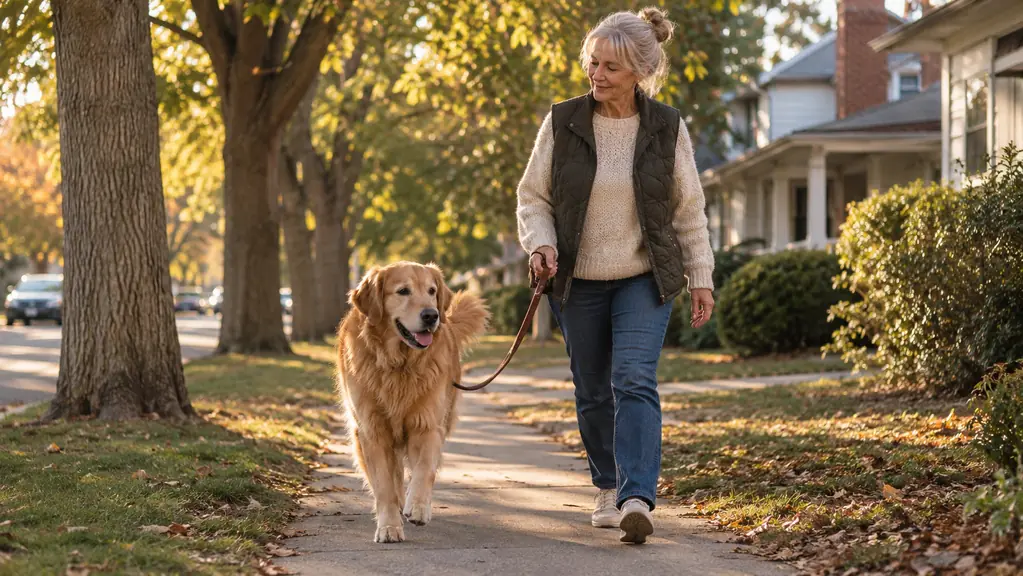
We walk the same loop most mornings: down the driveway, past the neighbor's hedge, around the cul-de-sac, and back. Murphy is convinced the pine tree at the halfway point is his personal enemy. The front clip has not changed his opinion. It has changed the outcome. I can hold him with one hand and keep my feet. On the icy days, that is the whole review.
I am hard on soft goods because I quilt, and I notice loose threads, uneven seams, and webbing that wants to fray. The rabbitgoo has softened over 14 months. The fabric looks broken in. Nothing has torn. No strap has slipped once I set it. I have not found a seam that worries me, and I have turned it over in good light looking for one. That matters more to me than a fancy label stitched on the side.
Murphy sheds heavily twice a year. The mesh collects hair the way a felt board collects lint. I keep a sticky roller by the door and give the harness a pass every few days. In mud season I rinse it in the sink and hang it on the porch rail. The polyester and mesh dry overnight. The reflective strips have stayed put. I have not had to repair anything, which after 14 months of daily use is more than I can say for the last collar I bought.
The Fit Details That Actually Matter
I measured Murphy with a cloth tape and had Dale hold a biscuit in front of his nose. The chest measurement is the one that counts. The weight range is a rough guide, not a guarantee. A dog at the low end can still have a deep chest, and a dog at the high end can be narrow. If the tape says 33 inches, you are close to the top of the Large. If it says 34, do not force it and do not size up on hope.
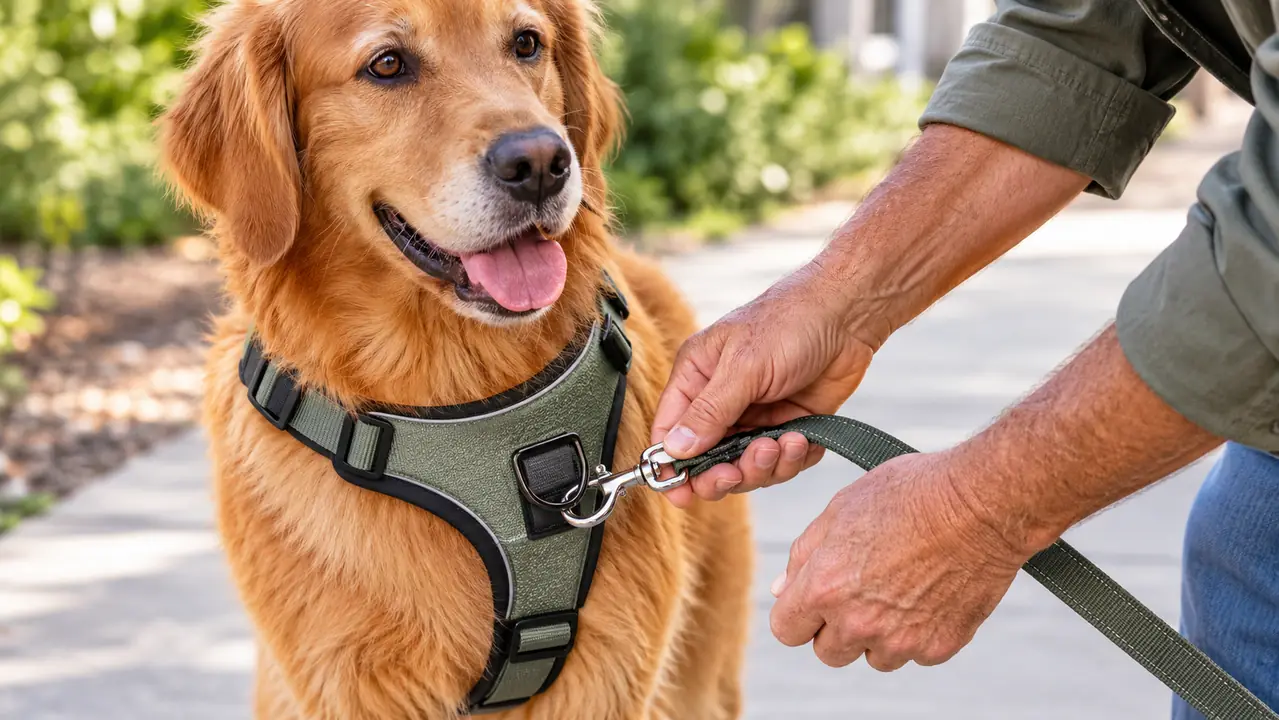
The four adjustable straps do the real work. I set each one at a time, starting with the strap across his chest. It took three or four walks to stop fiddling with it. Once set, the harness stayed where I put it. Murphy can back out of a collar in about four seconds when he is determined, and I have watched him try it on this harness without success.
The buckle is easy to find by feel, which matters on a dark morning in January. The metal hook loops are sturdy. I check them the way I check a quilt seam, with a firm tug before I trust them. The breathable mesh keeps Murphy from overheating on humid Tennessee afternoons, at least as much as any harness can. The polyester has taken branches, mud, and repeated rinses without complaint.
What the rabbitgoo Gets Right
The two leash clips are the main event. With the front chest clip, I have steering. With the second clip, Dale has a more traditional walk. One harness covers both of us, which is worth something when you are swapping the leash at the door with one hand while the other hand holds a seventy-pound optimist. I do not have to own two harnesses for two kinds of walks.
The reflective strips are a quiet benefit. Our evening walks happen after supper, and cars come around the cul-de-sac faster than they should. I would not call the strips a light. They are a help. I still wear a reflective vest and carry a small flashlight. The harness is one layer of safety, not the whole plan, and I would rather stack three small things than trust one.
The value is in the fit and the two clips. I have replaced cheap harnesses in the past because the stitching failed or the buckle bent. This one has not given me a reason to shop again. That is the kind of value I can measure, and it is the reason the harness lives on the hook by the door instead of in the basket of things I meant to return.
The Walks Where It Earned Its Keep
The first real test came on a windy morning when a plastic bag tumbled across the road. Murphy hit the end of the leash like a train. The front clip spun him toward me, and I stayed on my feet. I did not look graceful. I looked like a woman holding a leash with both hands and saying his name in a firm voice. But I was upright, and he was not in the road, and that is the entire job description.
The second test was the lake trail. Dale and I take Murphy there on weekends, and the path is narrow enough that passing another dog takes planning. The front clip lets me step off the path and keep Murphy facing me while the other dog goes by. He still whines. He still wants to say hello. But I can hold him with one hand and keep the leash out of the other walker's way, and I have done it now dozens of times without a tangle.
Where It Falls Short
It is not a training fix. If your dog lunges at other dogs, the front clip gives you control, but you still have to teach a turn and a sit. I worked with Murphy for months. The harness bought me time. It did not buy me obedience. Anyone who tells you otherwise has not walked a determined Lab mix past a squirrel at close range.
The fit range is wide, and that cuts both ways. A Large that fits a 45 kg dog will not fit a 15 kg dog well, even though both are inside the listed range. You have to measure the chest. A harness that is too big will rub no matter who made it. I have seen dogs at the park with harnesses hanging loose because someone bought by weight alone and never took a tape to the dog.
The front clip takes some getting used to. Murphy zigzags when he is excited, and the leash can wrap behind his front legs if I am not careful. I have learned to keep it short and to one side. A first-time user will probably have the same learning curve. It is not a flaw in the harness. It is the nature of a front attachment, and it is worth knowing before you are halfway across a crosswalk.
The mesh collects hair. I said it already, but it bears repeating for anyone with a double-coated dog. You will be rolling hair off this harness, especially in spring. The straps can also rub if you leave them loose and the harness shifts. I check under Murphy's front legs after every walk. A ten-second look saves a sore spot he cannot tell me about.
The buckle takes two hands on a wiggly dog. That is not a deal breaker for me. It might be for someone with hand strength issues. I have arthritis in my thumbs and I manage it fine, but I would not call it effortless on a cold morning when Murphy is already dancing.
What I Liked
- Two sturdy metal leash clips give you a front attachment and a second option
- Four adjustable straps let you dial in the fit around the chest and body
- Breathable mesh and polyester have held up to 14 months of daily two-mile walks
- Reflective strips add a useful layer on early and late walks
- Secure buckle closure and sturdy metal hook loops
- Has stayed put on a strong dog who can back out of a collar in seconds
Where It Falls Short
- Does not stop pulling on its own, it only redirects the pull
- The wide size range means you must measure the chest, not just weigh the dog
- The leash can wrap behind the front legs if you are careless
- Mesh collects hair, especially during heavy shedding season
- The buckle takes practice with a wiggly dog
The front clip did not teach Murphy to stop wanting the squirrel. It gave me a way to stay upright while we worked on the wanting.
How It Has Held Up to Wear and Washing
Fourteen months of twice-daily walks is a fair test of anything made of fabric. The harness has faded. I expected that, and I do not mind it. What I cared about was whether the straps would stretch, whether the stitching at the load points would give, and whether the mesh would tear where Murphy's shoulders move. None of those things happened. The webbing still feels firm between my fingers.
I wash it more than the instructions probably ask for, because I have a dog who finds every puddle between here and the cul-de-sac. A sink rinse, a little dog shampoo, a hang on the porch rail, and it is dry by the next morning. The buckle has not rusted. The metal clips have not stiffened. The reflective strips have dulled a little with washing, which I think is honest wear rather than a defect.
The one maintenance habit I would pass along is checking the strap ends. Where I adjusted the four straps, there is a tail of webbing that can work loose over months of on and off. I trimmed nothing. I just check that each tail is tucked through its keeper before we leave. It takes a few seconds and it keeps the fit where I set it.
Who This Is For
This is for the owner of a strong dog who needs steering more than decoration. The rabbitgoo Large fits dogs in the 15 to 45 kg range with a chest up to 33.4 inches. It is for daily neighborhood walks, for dogs who back out of collars, and for people willing to measure and adjust. If you are 61 like me and your dog is 72 pounds of squirrel ambition, this is the kind of help that changes your morning.
It is also for the household where two people walk the dog differently. Dale likes the second clip. I like the front. We do not have to argue about which harness is by the door, and I do not have to redo the straps every time he takes Murphy out.
Who Should Skip It
Skip it if your dog is outside the size range. A Large is not a universal fit, and a dog under 15 kg will swim in it no matter how tight you pull the straps. Skip it if you want a harness to solve pulling without any training on your part. Skip it if your dog hates being handled around the chest and shoulders, or if buckling a strap behind the shoulders is hard on your hands. I do not know your dog. I know Murphy, and I know this harness fits him.
Skip it if you need something for a dog that chews. This is fabric and mesh, not armor. Murphy has never chewed a harness, so I cannot tell you how it would survive a determined puppy. I can tell you the stitching has held up to normal wear, not to teeth.
What I'd Tell a Friend at the Door
Measure the chest before you order. Not the neck. Not the weight. The chest. Use a cloth tape, keep it snug but not tight, and write the number down where you will find it. If you are between sizes, think about the dog's shape. A deep-chested dog needs room to move. A narrow dog can end up swimming in a harness that is technically the right weight range.
Set the four straps before your first real walk. Put the harness on, check the fit, take it off, adjust, and try again. Walk around the living room. Sit on the floor and see whether anything digs into the dog when he lies down. It is much easier to fix at home than at the end of the driveway with a squirrel in sight and a leash in your teeth.
Use the front clip for the walks where you need control. Use the second clip for the walks where you want a looser leash and a calmer pace. Do not expect the harness to teach your dog to stop pulling. Expect it to give you a way to stay upright while you teach him. That is the honest trade, and it is the reason I still use the rabbitgoo every single day.
Rinse it when it gets muddy. Roll the hair off when it gets fuzzy. Check the straps under the front legs and the webbing tails at the adjusters. Mine has held up for 14 months with that little bit of care. I would buy it again for Murphy. I would not buy it for a dog outside the size range, and I would not buy it as a substitute for the weeks of loose-leash practice that actually changed our walks.
A front clip will not train your dog. It will help you stay upright while you do.
If you need steering for a strong dog and you are willing to measure the chest and adjust four straps, this is the harness I would hand you at the door.
Amazon Check Availability on Amazon →