

Here is the honest version, up front: the Depets Self-Cleaning Slicker Brush is a good brush that gets sold on its least important feature. The button is what shows up in every photo and every video, and the button does work, mostly. But after about a year of using this brush two or three times a week on Murphy, our seventy-two pound yellow Labrador mix, the button is not what keeps it in the basket by the back door. The tines are. That is the part nobody puts in the product pictures, and it is the part that decides whether your dog stands still for ten minutes or drifts off toward the door after two.
I am bringing that up first because most write-ups of a slicker brush spend their whole length on the cleaning mechanism and never mention how the tool behaves on an actual dog. Murphy is six, adopted from the county shelter at two, and he sheds hard twice a year in a way that turns our floors into a second, flatter dog. He also has opinions. He will stand for a brush that reaches his undercoat and he will walk away from one that scratches him, and he does it without any drama, just a slow lean toward the door. That distinction turns out to be almost the entire review.
The Quick Verdict
The sixty degree bent tines reach real undercoat on a heavy shedder without scraping skin, which is the whole job. The release button is a genuine convenience on a normal week and only a partial one during a spring blowout, and the 5.91 inch head means more strokes on a big dog. Buy it for a dog that tolerates brushing. It will not fix one that does not.
Amazon Check Today's Price →Murphy sheds in April and again in October. This is the brush by the door in both months.
Stainless steel tines bent at sixty degrees, a one-click release button, and 3.53 ounces in the hand so a ten minute session does not wear out your wrist.
Amazon Check Today's Price on Amazon →How I Ended Up With a Slicker Brush at All
For years I used a cheap bristle brush. It was fine on the topcoat and completely useless underneath it. I would brush Murphy on the porch for fifteen minutes, watch a cloud of hair drift across the boards, feel quietly pleased with myself, and then find the same amount of hair on the rug an hour later. The bristles were moving loose hair around the room. They were not lifting it out of him.
Slicker brushes work differently. The tines are fine metal pins set close together, and they reach down through the topcoat into the softer undercoat where the shedding actually comes from. That is the theory, anyway, and the Depets listing puts it in a way I did not expect: the stainless steel needles are designed with a 60 degree bend to reach the skin. That reads like catalog language until you use it and realize the bend is what keeps the tips angled along the coat instead of jabbing straight down into it.
Sixty degrees, not ninety. That is a flatter angle than I pictured when I first read it, and it is the reason Murphy stands still for this one. I have borrowed a friend's slicker with straight pins, and Murphy's whole back tightened up within half a minute of it touching him. The bent tine does its work at a slant, and a slanted approach is gentler on a dog who has started to stiffen a little after long walks. Nobody advertises that. It is just what the geometry does.
What the One-Click Cleaning Button Really Does
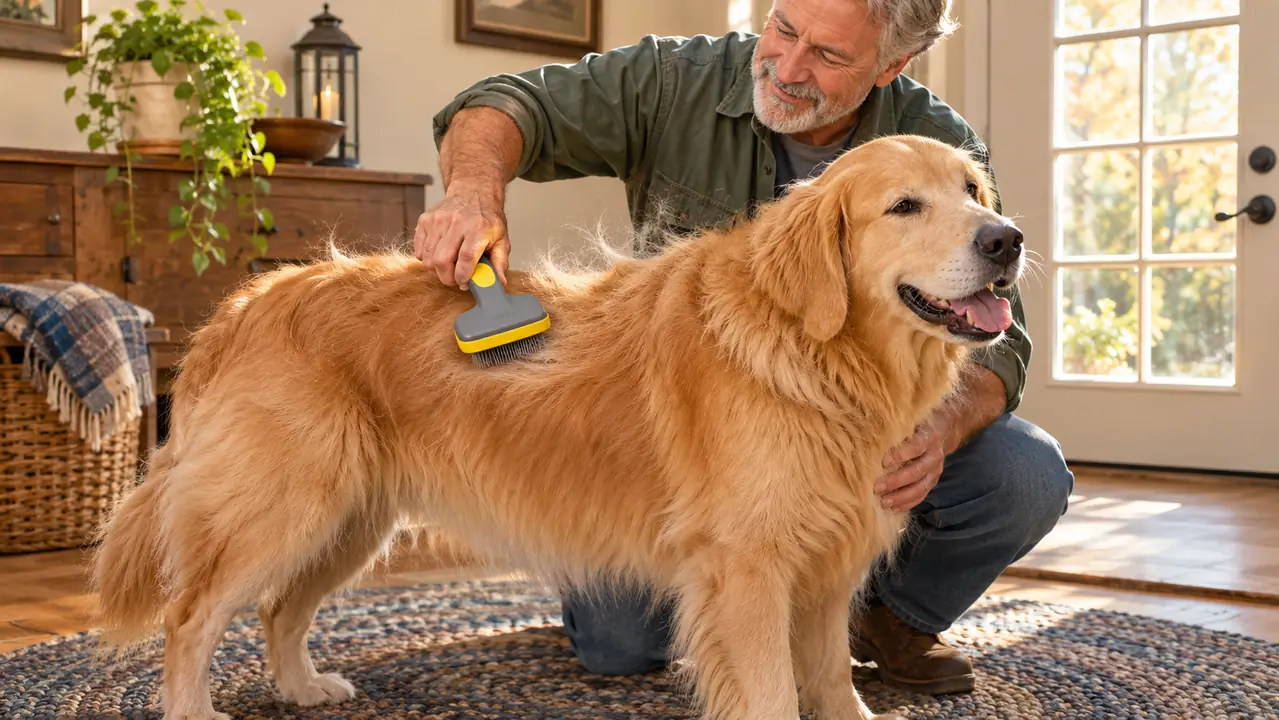
Push the release button on the back of the brush and the tines retract into the body. The hair that was wound around them stays where it was and slumps off in a pad. That is the entire mechanism, and it is genuinely useful, because the alternative is picking damp undercoat out of metal tines with your fingernails, which is a miserable job I did for years with a comb and a bristle brush and no small amount of muttering.
What the button does not do is work perfectly every single time. When Murphy is blowing his spring coat and I am pulling a full pad off him every few strokes, the hair packs down between the tines and the retract action presses it against the brush body instead of releasing it cleanly. I end up pulling the last of it off by hand. On an ordinary week, say in September, when there is a tenth as much hair coming loose, the button works exactly as advertised every time and cleanup takes four seconds.
So the fair description is that this is a very good convenience for routine brushing and a partial convenience during a heavy shed. That is still worth having. It is simply not the magic trick the product photos suggest, and if you buy expecting a whole pad to drop away in one clean piece in the middle of April, you will be mildly disappointed in a way that has nothing to do with whether the brush works. It works. The button just has a limit, and the limit is hair volume.
The Tines Are the Whole Story
The working part of this brush is a 5.91 inch head of stainless steel pins, and the whole thing weighs 3.53 ounces, which is light enough that my wrist does not complain after fifteen minutes on a dog who is determined to keep one eye on a squirrel. That weight matters more than it sounds like it should. A heavy brush makes you brush for shorter stretches, and short brushing sessions are how undercoat stays exactly where it was.
The pins are fine. Fine pins mean the brush slips under the topcoat, and they also mean you have to be careful around the face, the belly and anywhere the skin is thin. I do Murphy's back, flanks and hindquarters with this, and I switch to a soft curry for his head. Nobody at the company told me that. It is just what the tool is for and what it is not.
What I notice, with a quilter's eye for anything with rows and spacing, is the finish. The pins are set evenly, the rows run straight, and I did not find a single bent or wandering tine out of the box. I have owned cheap slickers where three or four pins were splayed at an angle and had to be pulled with pliers before the brush was safe to put near a dog. This one arrived clean, and a year in, the pins are still sitting in their rows. There is slight wear at the tips, which is what happens when metal meets a coat twice a week for a year, and nothing is loose.
The button is what sells this brush. The sixty degree bend is what makes Murphy stand still for it. Only one of those two things shows up in the product photos.
Where It Comes Up Short
Two places, and both are worth knowing before you buy.
First, the head is small relative to a big dog. Depets lists the dimensions at 5.91 by 1.97 by 1.97 inches, so you are covering a Labrador with something that sits easily in one hand. On Murphy's back that means more strokes than a wide grooming rake would need. I do not mind, because more strokes with a gentle brush beats fewer strokes with a harsh one, but if you are brushing something the size of a Great Pyrenees you will feel the difference in your forearm by the end of the session.
Second, this is a deshedding and finishing brush, not a mat splitter. If your dog comes home from the lake with burrs knitted into his feathering, or has a mat behind one ear that has been quietly forming for a month, the fine tines skate right over the top of it and do nothing useful. You need a comb or a dematting tool first and the slicker afterward. I learned that the slow way, with a burr the size of a marble and a dog who was extremely patient about the whole business.
The listing says the brush suits long or short hair, and it is fine on short hair, but on a short-coated dog there is barely any undercoat to reach, so you are paying for reach you will never use. That is not a fault in the brush. It is a fit question, and it is the kind of thing I would rather know before ordering.
How It Fits Into an Actual Week
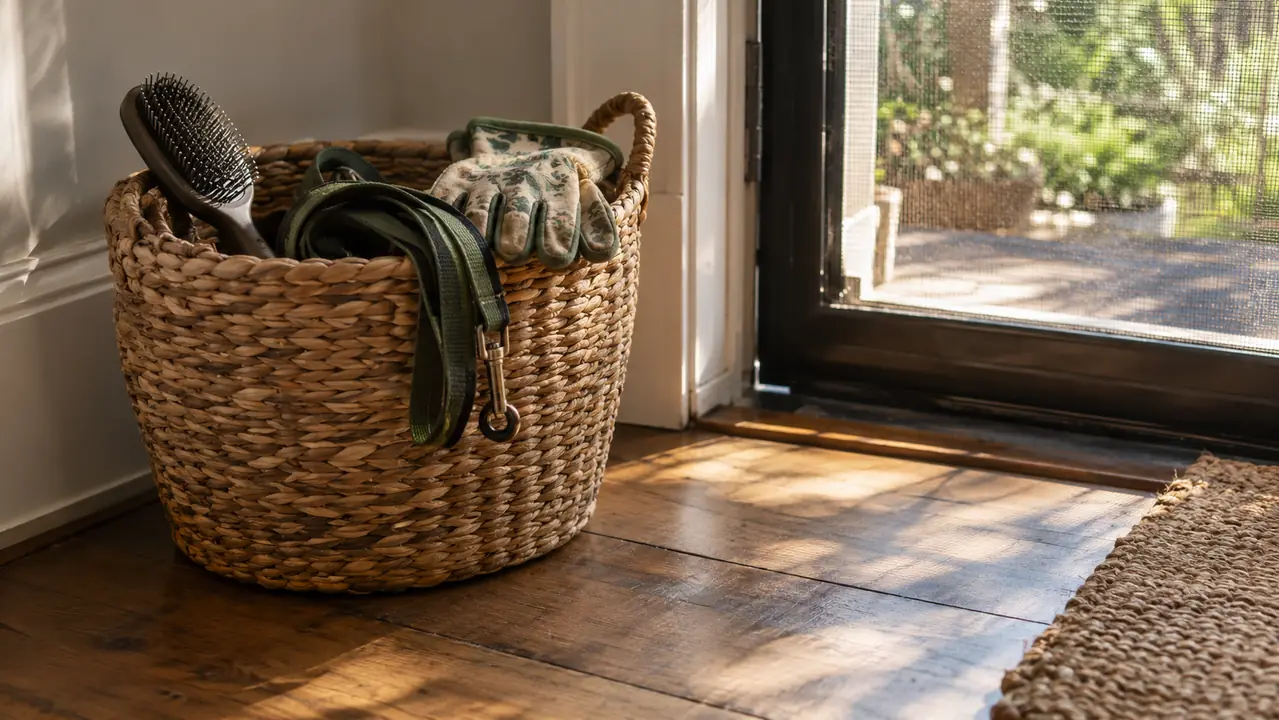
Our routine is unglamorous. The brush lives in a basket by the back door with the leash and a pair of garden gloves. Murphy comes in from the yard, I sit down on the step, and I brush him for about ten minutes. Twice a week most of the year, and daily for roughly three weeks in April and again in October when the coat lets go all at once.
The ten minute limit is deliberate. Past that, Murphy starts shifting his weight and looking at the door, and a brush that has worn out its welcome is worse than no brush at all. Ten minutes with a tool that actually reaches the undercoat beats half an hour with one that does not, and that is the entire argument for keeping a slicker around in the first place.
The hair goes into the kitchen trash, not the yard and not the compost. A full pad off a Lab in April is a genuinely surprising amount of material, and it will felt itself into a solid lump if you leave it on the porch, which I know because I did exactly that. The release button makes the transfer easy: press, tip the brush over the bin, tap once.
What I Compared It To
Before this I had a bristle brush, which I have already been unkind about, and a metal comb that I keep for burrs. The comb is still in the basket. A comb is the right tool for finding a mat and the wrong tool for clearing a winter coat, so the two do different jobs rather than competing for the same one.
I also borrowed that friend's wide slicker with straight pins, mostly to see whether head size mattered more than the bend. For Murphy it did not. He stood for the bent pins and fidgeted for the straight ones, and a brush your dog will not stand still for is a brush that does not work, no matter how much coat the wide head covers in a single pass.
What a Year of Use Looks Like
The brush is unscented, which sounds like nothing until you have owned a grooming tool that picked up a smell in a warm room and never let it go. This one still smells like nothing, and it has not developed that sour dog odor that soft gear tends to hold onto after a wet spring.
Cleanup is a rinse under the tap and a shake. I have not put it in the dishwasher and would not, because the retract mechanism has moving parts, and I can hear Dale asking whether I put it in the dishwasher before I have even done it.
The honest summary of a year is that nothing has broken. The button still springs back. The pins are still in their rows. The brush has done what it was bought to do every week from April through June and again in October, and it has done nothing dramatic at all, which is exactly what I want from a grooming tool.
What I Liked
- Sixty degree bent stainless steel pins slip under the topcoat without scraping skin
- One-click release button makes cleanup quick on a normal shedding week
- Light at 3.53 ounces, so a ten minute session does not tire your wrist
- Even pin spacing and a clean finish out of the box, still holding after a year
- Unscented and easy to rinse under the tap
Where It Falls Short
- Hair packs into the tines during a heavy spring shed and needs a hand pull to finish
- The 5.91 inch head means noticeably more strokes on a large dog
- Fine tines are the wrong tool for mats and burrs
- More reach than a short-coated dog will ever need
Who This Is For
This is for the owner of a dog that tolerates brushing and sheds enough to notice. Murphy is the example I know best: a Lab mix with a thick undercoat that lets go twice a year and a temperament that will hold still for ten or fifteen minutes if the tool is gentle with him. If that describes your dog, the Depets brush will earn its spot by the door and you will wonder why you waited.
It is also for the person who has been making do with a bristle brush and does not quite realize how much hair that brush is leaving behind. That was me for years. The difference was not subtle. In the first week with a slicker, the rug needed vacuuming roughly half as often, and Dale noticed before I said a word about it, which is the most reliable proof I can offer.
Who Should Skip It
Skip it if your dog hates being brushed. A slicker does its work through contact, and no amount of thoughtful design fixes a dog who does not want to be touched. Start with a curry or a grooming mitt and work up from there over a few weeks.
Skip it if the coat is genuinely matted, or if you are dealing with a doodle that needs line brushing with a comb and a dematter. Do not buy this and expect it to solve a mat, because it will not. And skip it if you have a very large, very heavily coated dog and you brush for half an hour at a stretch, because a wider rake will save you real effort in that case.
The Short Version
A year in, the Depets Self-Cleaning Slicker Brush is the tool I reach for first and the one I would replace with the same model if it went missing. The button is a convenience, the bent tines are the actual engineering, and the honest caveat is that a heavy shed will outrun the release mechanism and leave you picking hair off by hand. None of that is a reason to walk past it. It is simply the full picture, which is what I would want if I were the one reading this instead of writing it.
If your dog sheds twice a year and you are tired of the rug, start here.
Twice a week, ten minutes a session, one press of the button over the bin. That is the whole routine that took our house from vacuuming daily to vacuuming every other day.
Amazon Check Today's Price on Amazon →