
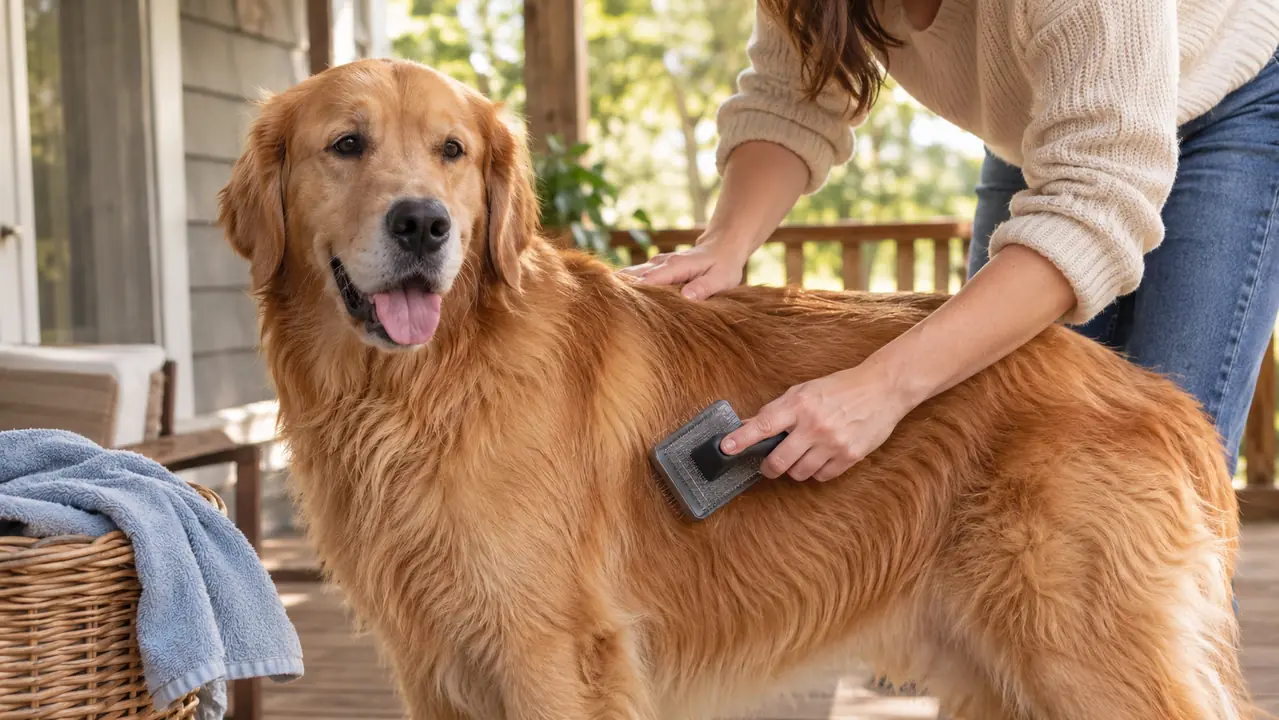
Murphy is a yellow Labrador mix, six years old, seventy-two pounds, and he sheds like it is his job. Twice a year he turns the living room into a snow globe. In between, he leaves a fine film of hair on anything navy I own. For a long while I kept a cheap bristle brush in the basket by the back door and spent as much time picking hair out of it with my fingers as I did brushing the dog. About a year ago I swapped it for the Depets self-cleaning slicker brush. This is what steady use has actually been like, from someone who has returned more pet gear than she has kept.
I am not a professional groomer. I am a retired school librarian outside Knoxville with one dog, a fenced backyard, and a low tolerance for gadgets that need a manual. What I can tell you is what held up, what annoyed me, and who I think should spend the money. The short version: it is still the brush by my back door a year later, which is more than I can say for most of what I have bought for this dog.
The Quick Verdict
A light, well-built slicker that clears itself in one push and has survived a year of twice-weekly use without a jammed button or a bent pin. It will not demat a coat, and the edges need a thumb now and then.
Amazon Check Today's Price →The brush that outlasted every other one in the basket
One push clears a full head of hair in about three seconds. A year in, the button still clicks and the pins still hold their shape. Check the current price before you buy.
Amazon Check Today's Price on Amazon →How I've Used It
I brush Murphy two or three times a week in the cooler months and every single day during the spring and fall sheds, which in east Tennessee run about three weeks each and feel longer. Sessions are short, eight to ten minutes, usually on the back porch. He stands for it. He does not stand for much.
The first week I owned it I did something I had not done in years, which was brush the dog on purpose instead of out of guilt. Before, brushing was a chore I put off until the living room rug told on me. The bristle brush pulled, Murphy walked away, and I quit after two minutes. With this one I could work a whole flank before he shifted his feet. Now the routine is the same most evenings. I let him out, he does his business, and while he stands on the porch sniffing at whatever the wind brought in, I do one side, then the other, then the rump. Eight minutes if he is patient, ten if he is not. During a shed I do it daily and the sessions actually get shorter, because there is less to lift each time.
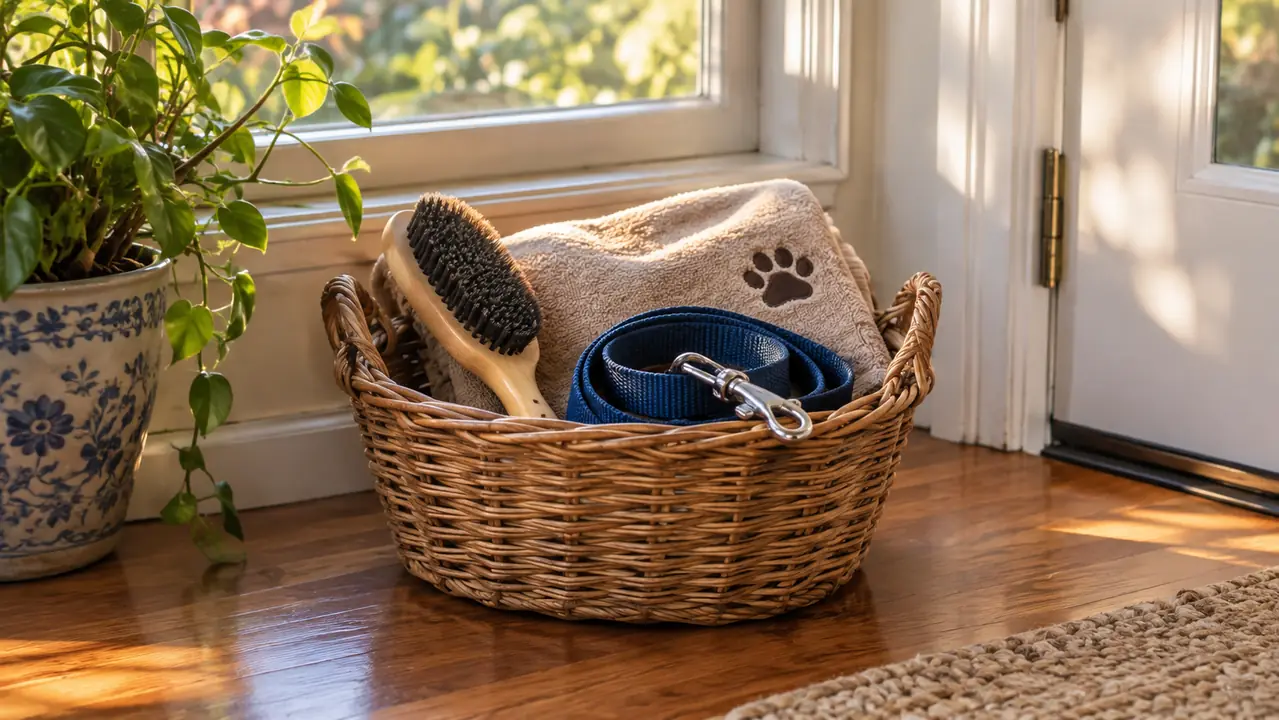
The brush lives in a wicker basket by the back door with the leash and a folded towel, so I pass it on the way out and pick it up without thinking. That sounds like a small thing, but it is the whole reason the brush gets used. Gear that lives in a drawer does not get used, no matter how good it is.
The tool measures 5.91 by 1.97 by 1.97 inches and weighs 100 grams, about 3.53 ounces. In the hand that reads as light enough to use for ten minutes without my wrist complaining and small enough to sit in a basket without taking over. My husband Dale has arthritis in his right thumb and can use it without a word of complaint, which is a stronger endorsement than anything I could write on his behalf.
What the One-Click Cleaning Button Actually Does
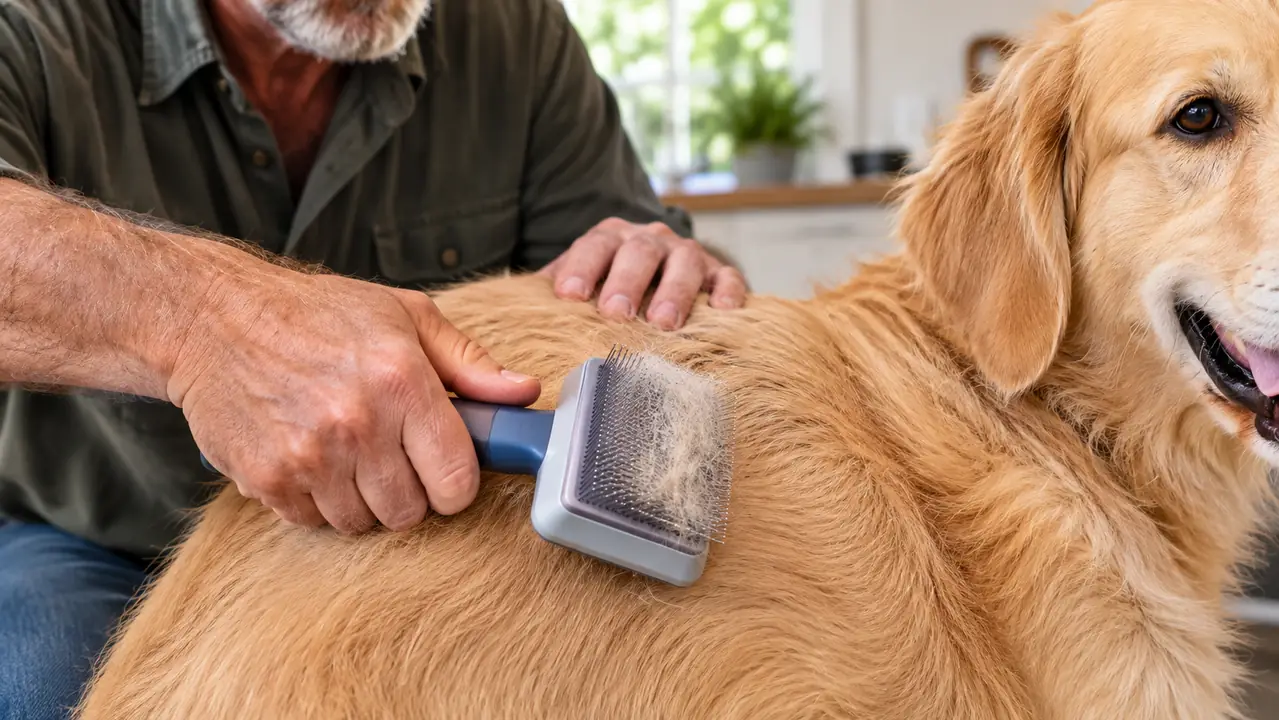
Here is the part people ask about. There is a button on the back of the head. You push it and the stainless steel pins retract into the body of the brush, which lets the collected hair slide off in one soft pad instead of staying woven into the teeth. I have used brushes where you had to dig the hair out with a comb, and I have used one where the button seized up inside a month. The Depets button has not seized, and I have never once had to press it twice to get it to release.
It works best with a loaded head. When the brush is only a third full, pushing the button drops a thin scrim of hair that you end up chasing with your fingers anyway. So I brush until the head is full, then clear it. That works out to one push per session, maybe two during the heavy shed, and it takes about three seconds.
During the fall shed I keep a small plastic tub beside me on the porch, the kind that held blueberries in July, and the whole thing has turned into a rhythm. Brush until the head is full, hold the brush over the tub, push, watch a pad of undercoat come away whole, brush again. Ten or twelve pads a session in September, two or three in January. The pads are loose and light, which means they lift off the porch with the first wind, so I have learned to empty the tub into the bin before I go back inside. That is not a fault of the brush. It is just what a heavy coat looks like when it leaves the dog. Without the button I would be standing there picking at the head with my fingers, which is exactly what I did for years and do not miss.
One small thing I would change. Hair that collects right at the rim of the head does not always drop with the rest, so every few sessions I run a thumb along the edge to clear it. Five seconds of nuisance, not a dealbreaker, but it is the sort of detail I notice because I sew and I am fussy about edges.
The 60 Degree Bend and What It Feels Like on the Dog
The listing says the stainless steel needles are bent at 60 degrees to reach the skin and promote blood flow. I cannot measure blood flow and I would not trust anyone claiming to from her kitchen. What I can tell you is that the bend changes how the brush sits against a dog. The pins go into the coat at a shallow angle instead of straight down, so the brush glides along the skin rather than scraping across it.
Before the slicker I tried two other things, and I want to be fair to them. First was a rubber curry comb, which is supposed to pull loose hair out like a magnet. On Murphy it mostly polished him. The hair stayed on the dog and the comb came away with a thin grayish film that took forever to rinse off. Second was a grooming glove, which he liked a great deal and which did almost nothing. It moved the topcoat around and left the undercoat exactly where it was. What the slicker does differently is reach below the surface without needing to press hard, and the difference between this and the old bristle brush is the difference between a rake and a broom. One gets underneath. The other just moves what is already on top.
Murphy backs away from anything that pulls. The first time I used this on his shoulder he leaned into it, which he had never once done with the bristle brush. By the third session he was turning himself around so I could get the other side. When a seventy-two pound Labrador volunteers for grooming, something about the tool is working.
The other thing the angle does is lift undercoat. On a Labrador in September, a ten-minute session fills the head twice and the porch afterward looks like something exploded out there. That is the honest test of a slicker brush, and this one passes it.
A Year In: What Held Up and What Didn't
I look at seams the way a quilter does, which is to say I look for the spot where a thing will fail. On this brush that is the joint where the head meets the handle. After a year of two or three sessions a week plus two heavy shed seasons, that joint is as tight as it was on day one. Nothing rattles. The button still has a clean click to it.
The pins are what would go first on a cheap brush. I have owned slickers where the tips folded over like a worn-out fork within a few months. These have kept their shape. A few of the outer pins have a slight lean after a year of pushing through a dense undercoat, but nothing that changes how the brush works or where it reaches.
I bought the Depets brush in the last week of September, because the fall shed was already starting and the old brush had begun to snag on the first pass. It got knocked off the porch once, in January, onto wet ground, and I brought it in, shook it off, and set it by the door. Three days later it was business as usual. No rust on the pins, no rattle in the head, no complaint from the button. Every few weeks I rinse it under the tap, set it on a towel to dry, and it has never shown a spot. That is a low bar for a tool and a high bar for a brush that costs what this one does, and I think about it every time I am tempted by the ones in the checkout aisle at the feed store.
The body has picked up a couple of scuffs from living in a basket with a leash clip, and the lettering on the back has worn away. That is cosmetic. What matters is that nothing has cracked, the button has never jammed, and the pins have not rusted, and I have never once dried it carefully. It gets shaken off and dropped back in the basket.
What It Doesn't Do
It does not replace a bath, and it will not fix a coat that has already matted. Murphy gets a small mat behind one ear every winter, and this brush slides over it rather than through it. For that I use my fingers first and a metal comb second, and I would tell anyone with a matted dog to do the same rather than saw at it with a slicker.
It also does not lift the hair that has already worked into the sofa cushions or the cloth back seat of the Outback. That is a different job and a different tool. And it is not a finishing brush. On the longer feathering at the back of Murphy's legs, the Depets leaves the coat looking rough, so I follow with a bristle brush there. Which is a little funny, given that the bristle brush was the thing I set out to replace.
What I Liked
- One push clears a full head of hair in about three seconds
- Stainless steel pins have held their shape through a year of twice-weekly use and two heavy shed seasons
- The 60 degree bend lets the brush glide along the skin instead of scraping it
- At 100 grams it is light enough for a ten-minute session without wrist strain
- The joint between head and handle is still tight with no rattle
Where It Falls Short
- Hair at the very rim of the head does not always drop with the button push
- Slides over mats instead of working through them, so you still need a comb
- Leaves longer feathering looking rough without a follow-up brush
After a year of two or three sessions a week plus two heavy shed seasons, the joint where the head meets the handle is as tight as it was on day one.
Who This Is For
This is for the owner of a double-coated dog that blows coat twice a year and leaves hair on the furniture the other ten months. It suits someone who brushes in short sittings, on a porch or in a garage, and wants a tool that clears itself instead of one that has to be picked clean with the fingers. It suits a household with one dog and a basket by the door, where the brush is out in the open and gets picked up on the way past. If you want something you can grab, use for eight minutes, knock out, and put back without thinking about it, this is that brush. The twelve-month record behind it is the reason I would buy it again rather than try my luck with another cheap one, and the reason I stopped looking at all once the first shed season was behind me.
Who Should Skip It
Skip it if your dog is already matted or has a coat that needs line brushing with a comb, because a slicker is the wrong tool for that job and this one is no exception. Skip it if you expect a single brush to finish a coat, since you will still want something for the feathering and something else for the furniture. And skip it if you brush once a month at best. The button and the pins are built for steady use, and a brush that sits in a drawer is a brush you did not need. For everyone else with a shedding dog and a basket by the back door, this is the one I would hand you.
A year of twice-weekly brushing and it is still the brush by my door
Light in the hand, one push to clear, and built well enough that the seam never loosened. See what it costs today.
Amazon Check Today's Price on Amazon →