
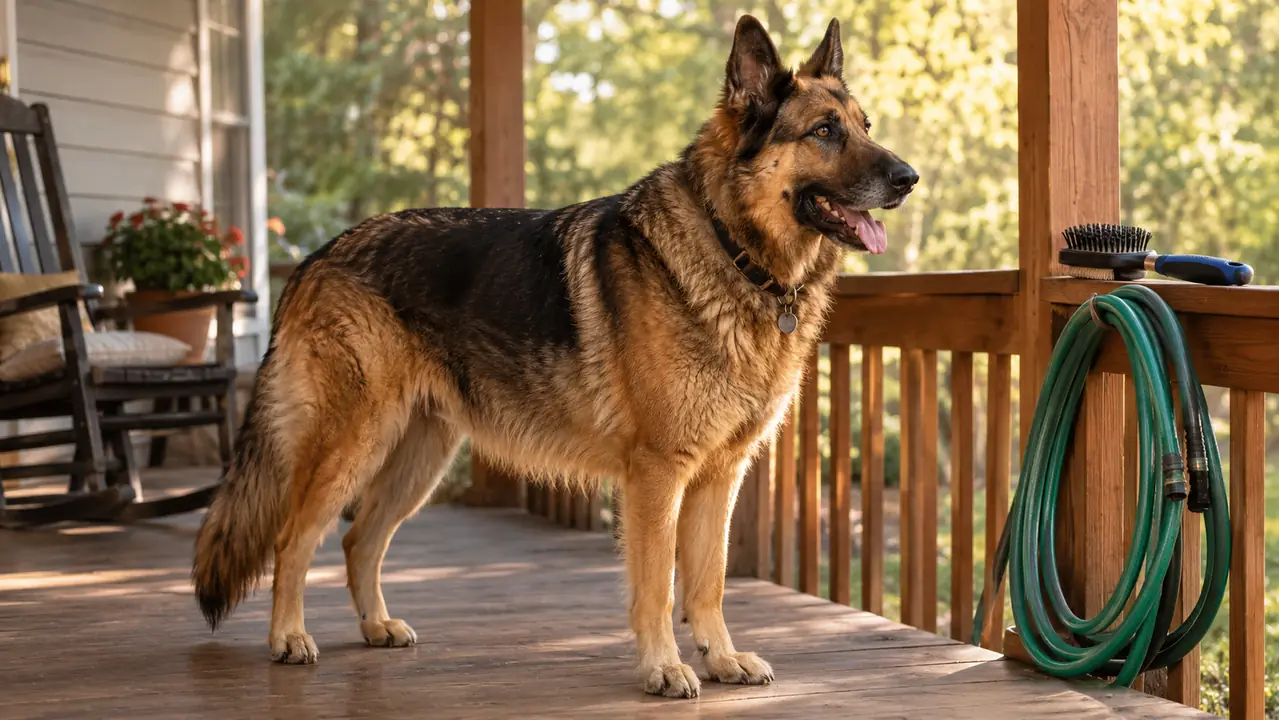
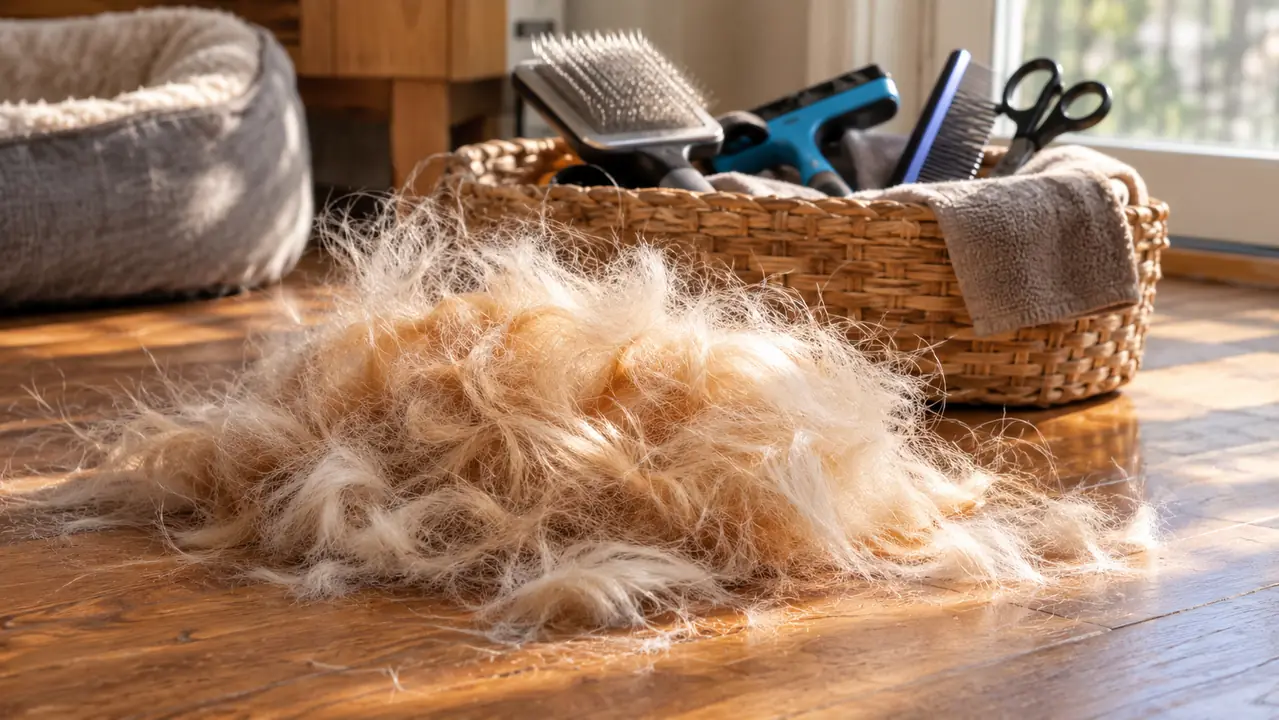
The plain bristle brush is where most of us start. It is cheap, it lives in a drawer, and it does a fine job of making a dog look brushed for about ten minutes. Then shedding season arrives, you run it down the dog's back, and the fur keeps coming in handfuls anyway. I went through that cycle for years with Murphy, our yellow Labrador mix, before I bought the Depets Self-Cleaning Slicker Brush about a year ago. Since then both brushes have lived in the same basket by my back door, and I have used them side by side on the same dog, which is the only honest way I know to say anything useful about which one is worth your money.
Here is the short answer. If your dog has a dense coat and sheds hard twice a year, the Depets brush does the job a bristle brush cannot, because it gets under the top coat instead of skating across it. If your dog has thin skin, hates the feel of metal, or you mostly want a tidy finish on the face and front legs, a plain bristle brush still earns its place and costs very little to find out. Most homes with a real shedder end up wanting both, and the order matters. Here is where each one wins.
| Depets Slicker Brush | Plain Bristle Brush | |
|---|---|---|
| Loose undercoat | Bent stainless needles reach under the top coat and lift dead fur out in pads | Bristles glide over the surface and mostly smooth what is already there |
| Comfort on thin skin | Metal needles can catch on a small mat, and Murphy walks off when they do | Soft bristles. He will stand for his face, ears and front paws |
| Cleaning the brush | One push of the release button and the hair lifts off in a single pad | You pick the fur out of the bristles by hand, tuft by tuft |
| Dense coat and small mats | The 60 degree bend slips under a mat instead of riding over it | Will not get under a mat, and pressing harder only annoys the dog |
| Finishing pass | Leaves the coat looking a little ruffled until you smooth it | Leaves the coat lying flat and tidy in a couple of minutes |
| Cost to try | More than a drugstore brush | About as cheap as pet gear gets |
| Learning curve | You need a light hand, especially over the hips and along the spine | None. You just brush |
| Best for | Heavy seasonal shedders with a dense or double coat | Face, ears, paws, puppies, and dogs that dislike metal |
Where Depets Wins
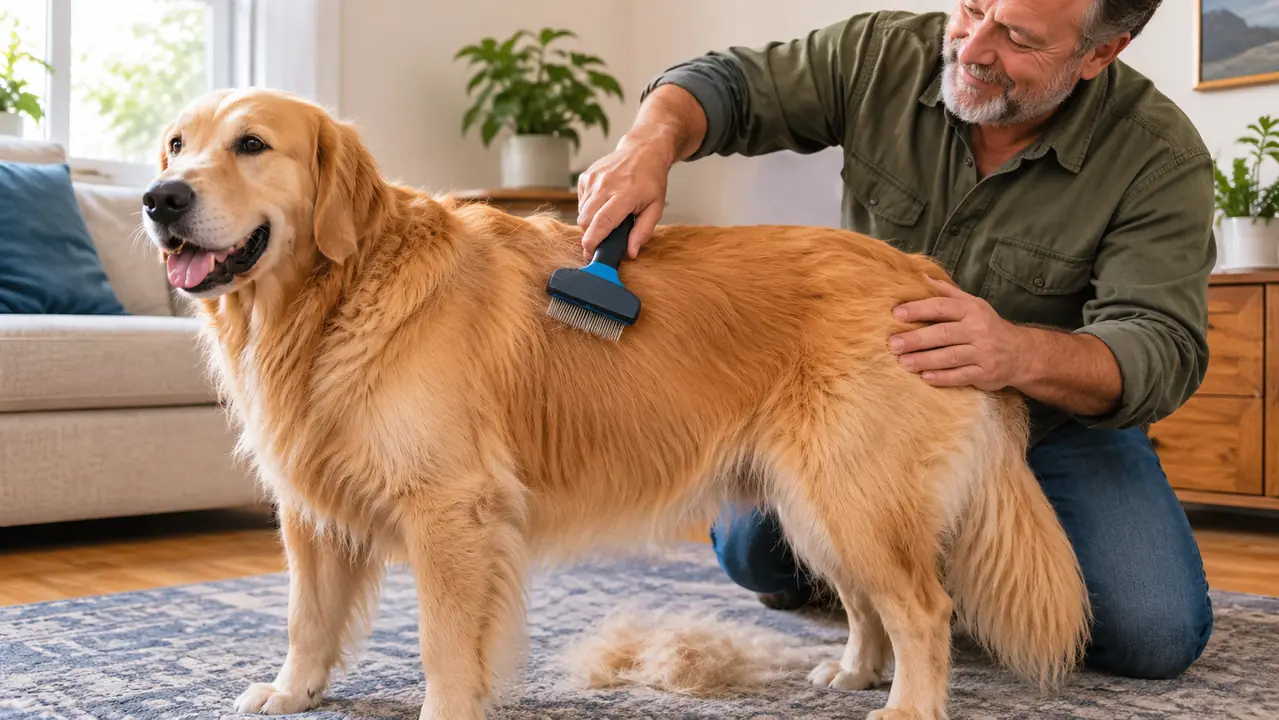
The undercoat is the whole argument. Murphy is 72 pounds of Labrador mix with the kind of coat that holds a winter's worth of fur and then lets go of all of it in April. A bristle brush smooths that coat. The Depets brush reaches into it. Its stainless steel needles are set at a 60 degree bend, which sounds like a small detail until you use it. The tips curve down toward the skin instead of pointing straight at it, so the pins slip under a layer of dead fur and lift it out rather than pressing it flat. Last April 12 I brushed him on the porch with the slicker for about eleven minutes and then, out of curiosity, weighed the pile on the kitchen scale. It came to just over four ounces. The next evening I gave him the same eleven minutes with the bristle brush and got roughly an ounce and a half, most of it off the surface. That is not a lab test. It is one dog on two evenings. But it matches what my hands told me all spring, and I stopped doubting the thing after that.
The release button is the second reason, and it is the one I did not expect to care about. Every brush has to be cleaned, and with a bristle brush the cleaning is the chore. You sit there picking tufts out of the bristles with your fingers and half of it stays behind. The Depets has a one-click cleaning button. Push it, the needles retract into the head, and the collected hair lifts off as one pad you can drop straight into the trash. I sew quilts in the evenings, so I notice how things are put together, and the button mechanism on this brush has held up through a year of twice-weekly use without going slack or rattling in the hand.
Where a Plain Bristle Brush Wins
Comfort, and I do not want to undersell it. Murphy has thin skin on his belly and on the backs of his hind legs, and he is not shy about leaving the room when he has had enough. Metal needles, even gently bent ones, will catch on a tender spot, and when they do he walks off and I have lost the session. The bristle brush never does that. He will stand for his face, his ears and his front paws with the bristle brush, and those are exactly the places I would not push the slicker.
Then there is the cost of finding out. A plain bristle brush is about as cheap as pet gear gets, so if you are unsure whether your dog will tolerate brushing at all, it is the sensible first purchase. There is no technique to learn either. You cannot press too hard, you cannot scratch a thin-skinned dog, and you can use it on a damp coat straight after a bath. The Depets brush does want a light hand over the hips and along the spine, and it took me a few sessions to stop leaning on it the way I leaned on the old brush.
The brush that fills a grocery bag in April, not a handful
If your dog's coat holds its undercoat the way Murphy's does, the Depets self-cleaning slicker is the one doing the actual work. Bent stainless needles, a one-click release button, and no picking fur out of bristles by hand afterward.
Amazon Check Today's Price on Amazon →How I Actually Use Both
In practice they are not really competitors in my house. They are a two-step. The Depets brush comes out first, on the back, the sides and the hindquarters, where the undercoat lives. Two or three passes in the direction the coat grows, then one pass against the grain, and the loose fur comes up in a pad. I do this on the porch, because a 72 pound dog in April distributes fur across a surprisingly wide radius. The porch is screened on three sides, and there is a rag rug by the door that catches most of what he shakes loose. I keep a lidded bucket beside the step so the wind does not carry the pile into Dale's vegetable beds, which happened once in March and which I heard about for the better part of a week.
Then the bristle brush, for the face, the ears, the front legs and the chest, and finally one smooth pass down the whole dog so he does not leave the porch looking like he lost a fight with a leaf blower. The whole routine takes about ten minutes in shedding season and three or four the rest of the year. I brush him two or three times a week normally, daily in spring and fall.
The one thing I would tell a friend before buying the slicker: go lighter than you think. The bent needles are designed to reach the skin and they will, but you do not need to lean on them. Short strokes, let the pins do the work, and watch the dog's ears and tail for the first few minutes. Murphy's tail gives him away long before he actually moves.
Ten minutes with the Depets brush in April fills a grocery bag with undercoat. Ten minutes with the bristle brush makes Murphy look tidy and leaves the fur exactly where it was.
Two Mistakes I Made Early
The first was pressing harder, on the theory that more pressure means more fur. It does not. It means a dog who stops standing still for you. About a month in I bore down on Murphy's flank, he turned and walked off, and it was two sessions before he was relaxed about the brush again. The bent needles reach the skin on their own. My hand only needs to guide them.
The second was trying to brush straight through a small mat behind his ear. A slicker will catch on a mat, and catching hurts. Work the mat loose with your fingers first, or brush after a bath when the coat is soft, then go back over it. That is what finally worked on the pea-sized mat behind his left ear in October. I picked it apart with my fingers over two evenings while he lay on the rug, then went over the spot for about twenty seconds with the slicker once the coat was loose. Brushing at it directly had only made him duck away. Same rule for any patch of skin that looks pink or irritated. Skip it that day and let it settle. A brush is a grooming tool, not a cure.
The third thing, not really a mistake but close: clean the head after every session, not once a week. With the release button that is five seconds of work. Let the hair pack in and the pins stop reaching where they need to go, and you will decide the brush does not work when the truth is that it is full.
What the Size and Weight Mean in Practice
The head measures 5.91 by 1.97 by 1.97 inches and the whole brush weighs 3.53 ounces, about 100 grams. That is light. I can go over a 72 pound dog from nose to tail without my wrist complaining, which matters more at 61 than it did at 40. It also means the brush is easy to hold at an angle instead of flat, and angling it is how you get under the coat on the shoulders and the rump.
The head is on the small side for a big dog. On Murphy, one pass covers a section of his back about the width of my hand, so a full brushing is more strokes than it would be with a wide undercoat rake. I do not mind, because a small head is also why I can work around his shoulder blades and the base of his tail without banging into bone. On a cat or a small dog it would cover far more ground per stroke. The listing says it suits dogs, cats and rabbits. I can only vouch for the dog.
The head is a little wider than three of my fingers laid flat, so covering Murphy's back takes six or seven overlapping strokes and his rump takes three more. My old bristle brush covers more ground per stroke, but it leaves the fur where it was, so that comparison flatters the wrong tool. Slower and effective beats fast and decorative, at least on a dog built like a coffee table.
It is unscented, which I noticed more than I expected. Some grooming tools come out of the package smelling like a candle shop and the smell sits on your hands for an hour afterward. This one just smells like nothing, and Murphy does not turn his head away from it the way he does with anything perfumed.
Who Should Buy Which
Buy the Depets slicker if your dog has a dense or double coat and you are tired of brushing for ten minutes and still finding fur on the couch. It is also the one to get if your dog mats easily behind the ears or along the flanks, because the bent needles get under the mat instead of riding over it. And if you have ever given up on a brush because cleaning it was worse than using it, the release button alone will change your mind about the whole category.
Stick with a plain bristle brush, or keep the one you already own, if your dog is thin-skinned and flinches, if you are brushing a puppy for the first time and want no chance of a scratch, or if your goal is a tidy finish rather than real deshedding. If your dog has a short coat and sheds lightly, the bristle brush will do everything you need and the slicker is money you do not have to spend.
If you have a heavy shedder, the honest answer is both, and the order matters. Slicker first for the undercoat, bristle second for the finish and the sensitive spots. That is what the basket by my back door looks like after a year, and I would not change it. Dale has stopped asking which brush is which, which I take as a sign the system works.
One brush does the deshedding. The other does the finish.
For the undercoat, the Depets self-cleaning slicker does what a bristle brush cannot: bent stainless needles that reach the skin, a one-click release button, and a 3.53 ounce head light enough to keep going. Today's price and the current listing are on Amazon.
Amazon Check Today's Price on Amazon →