
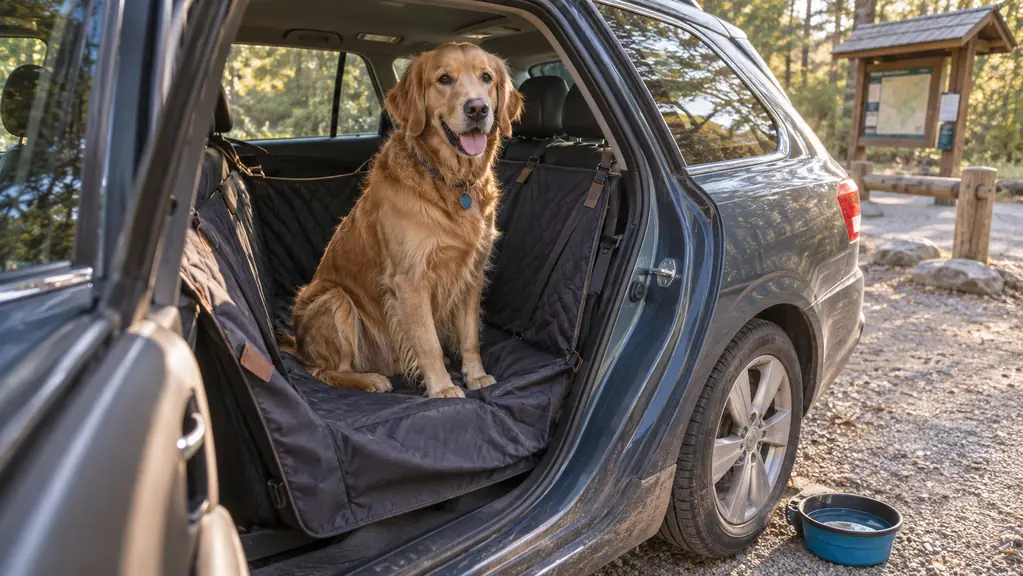
The first time I put a cover in the back of my 2019 Subaru Outback, I made the job harder than it needed to be. I unfolded the whole thing, climbed halfway into the back seat, and fought the straps while Murphy, my 72-pound yellow Labrador mix, watched from the driveway with the patient look of a dog who knew I was doing it wrong. The cloth seats had already collected a summer of lake-trail mud and enough yellow hair to stuff a small pillow. What I wanted was simple: something I could leave in place, something that would not slide when I braked, and something that would keep the seats underneath dry.
That is what led me to the URPOWER dog car seat cover. I have had the hammock version in the Outback for about 18 months now. It stays in the car, folded down when Murphy is not with me, and it has gone through weekly vet runs, lake-trail trips, and two heavy shedding seasons. Before this, I laid an old quilt across the seat. It slid every time I braked and soaked through on the first wet dog day. This is not a review of a product I used once. It is the installation routine I wish I had the first afternoon, written by someone who has crawled across a back seat with a strap in her teeth. If you have a dog, a cloth back seat, and a low tolerance for mess, the URPOWER cover is worth understanding before you buy.
The cover that stays put when a 72-pound dog hits the brakes
The URPOWER hammock is the one I leave in the Outback. Check the 54-inch backseat measurement first, then see the current listing.
Amazon Check Today's Price on Amazon →Step 1: Measure the back seat before you unfold anything
The URPOWER listing asks you to confirm one number before ordering: whether your backseat length is close to 54 inches. Do that with a tape measure, not with a guess based on the car's model name. I measured across the Outback's rear bench at the widest point, then measured again at the seat crease. The cover is a universal fit, and URPOWER says it works in sedans, SUVs, compact and mid-size trucks, but universal does not mean every back seat is the same shape. A bench that is much shorter will leave the sides hanging. A bench with deep bolsters can make the edges bunch.
I also checked the headrests. The Outback has two rear headrests that adjust up and down, and that matters because the top of a hammock cover needs a place to anchor. If your rear headrests are fixed or missing, read the listing carefully before you buy. The same goes for a truck with a narrow rear bench or a car with a center console that rises into the seat. The cover is listed at 16 by 15 by 1.5 inches and 2.58 pounds when packed, so it is not a heavy thing to handle, but the fit is what decides whether installation takes five minutes or twenty.
My advice is to measure, write the number on a sticky note, and leave it in the glove box. Then unfold the URPOWER cover on the driveway or a clean floor. Let it relax for a few minutes. The 600D Oxford fabric is stiff when new, and a cover that has been folded in a box will want to keep its creases. You are not ironing it. You are just giving it a chance to lie flat before you start threading straps.
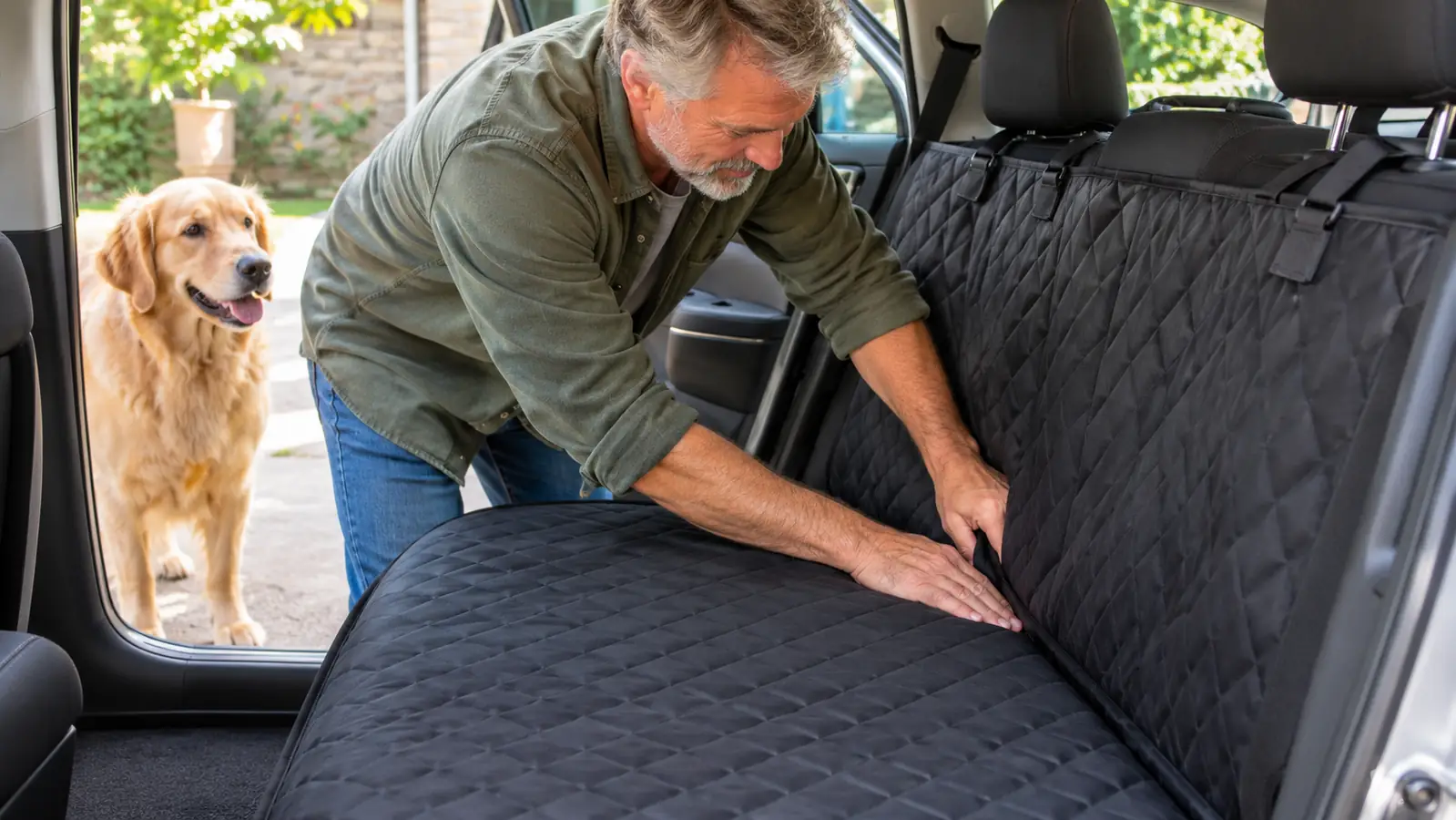
Step 2: Set the base anchors before you connect the top
The mistake I made first was starting at the headrests. On a hammock-style cover, the base has to be seated before the top is tensioned. I lift the back seat cushion slightly, push the anchor flap into the crease between the seat back and the seat bottom, and then press the seat cushion back down. That one move does more to stop sliding than any amount of tugging on the upper straps. If your rear seat does not fold or lift, you can still tuck the flap into the crease with your fingers, but take your time and keep the fabric flat.
URPOWER describes four levels of protection to keep a dog from slipping when you brake. I am not going to pretend I know exactly how every layer is stitched inside, but I can tell you what the result feels like. The backing grips the cloth, the base is held down at the crease, and the hammock shape keeps Murphy from sliding forward into the footwell. The first time he rode on it, he braced his front paws and looked mildly offended that the seat had changed. By the second trip he was lying down before we reached the end of the street.
This is also where I look at the seams, because I sew quilts and I cannot help it. The URPOWER cover has a clean bound edge and the stitching along the anchor flap is tight and even. I have not seen a split seam in 18 months of use. That does not mean you should yank on it like a tow strap. It means you can push the flap into the crease with confidence instead of worrying that you are about to tear it.
Step 3: Run the upper straps around the headrests and check the drop
Once the base is seated, loop the upper straps around the rear headrest posts. I do this from the back door on the passenger side, leaning in rather than climbing across the seat. Set the straps loose at first. You want the cover to hang like a shallow hammock, not a tight trampoline. If it is too tight, the sides pull up and the dog loses the flat part in the middle. If it is too loose, the cover sags into the footwell and the whole point of the hammock disappears.
I set the drop by eye, then check it with my hand. The cover should sit flat across the seat cushion and rise up the backrest without pulling the headrests forward. On the Outback, I run the straps just above the headrest adjustment notches and leave a little slack. Then I open and close the rear doors to make sure nothing is caught in the latch. A strap that looks fine with the door open can pinch when the door closes, and a pinched strap will work loose on the first bump.
If you have a dog that likes to step over the front seat, keep the hammock high enough to block the gap but not so high that it pulls the headrests. Murphy is 6 years old and has slowed down a little, so he does not try to climb into the front anymore. When he was younger, the hammock sides were the difference between a calm ride and a 72-pound dog trying to sit on my husband Dale's lap while I was driving. The cover is not a crash-tested harness and it is not a substitute for one. It is a barrier and a seat protector, and it does that job well.
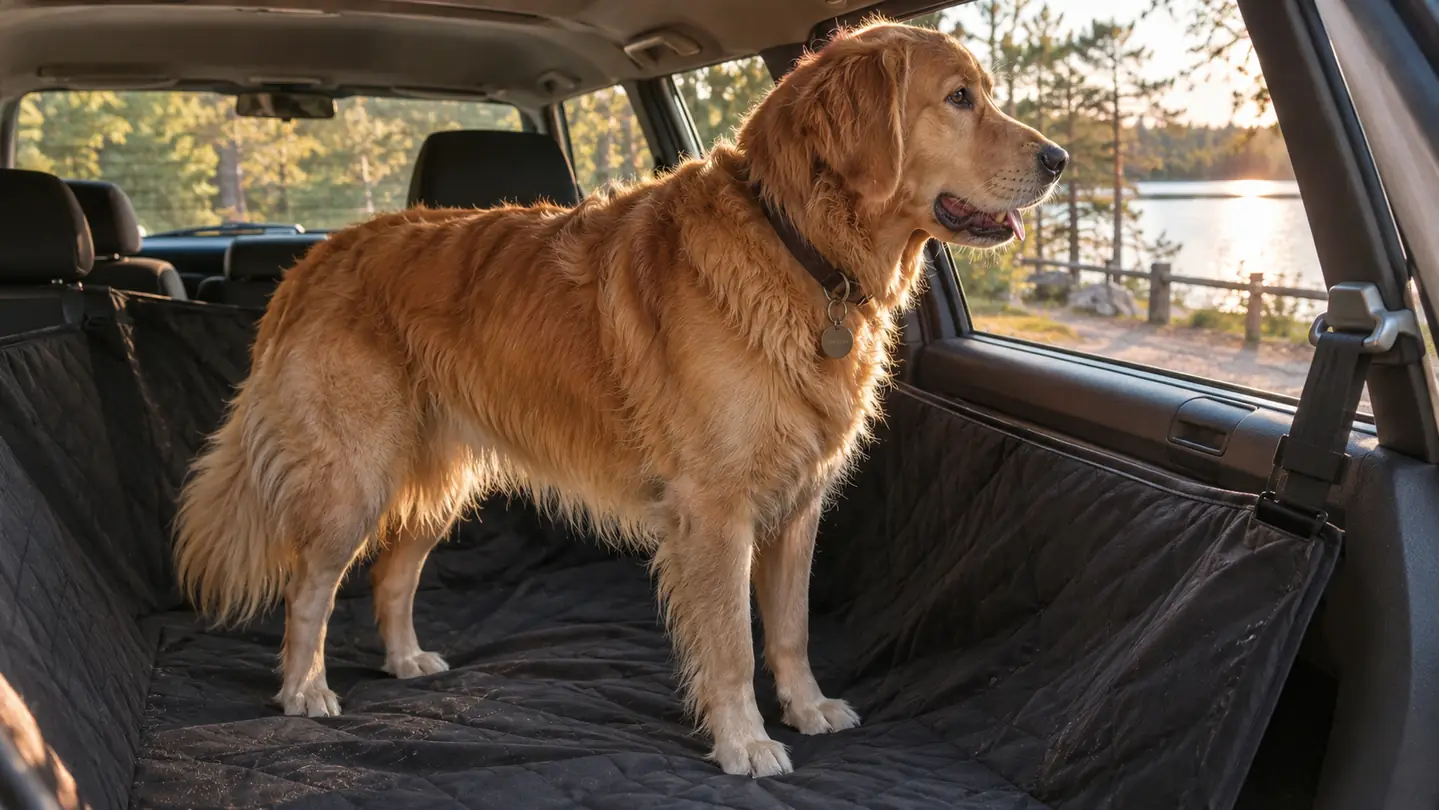
Step 4: Smooth the fabric and tuck the sides
With the base and top attached, I smooth the cover from the center outward. The 6-layer fabric is waterproof and wearproof, and it has a slightly stiff hand when new. A wrinkle in the middle will become a dog-sized lump once Murphy lies down. I push the side flaps down along the edge of the seat, then run my hand along the stitching to make sure the cover is not twisted. This takes about a minute and saves a lot of fidgeting at the trailhead.
The material has no strong smell, which matters more than people think. I have opened car gear that smelled like a tire fire and had to leave it on the porch for a week. The URPOWER cover smelled like nothing much out of the package. I still aired it out on the porch for an afternoon, because that is my habit with anything that goes in the car, but I would not have had to. If you are sensitive to smells, this is one less thing to worry about.
I also check the corners where the cover meets the seatbelt buckles. You do not want the fabric covering the buckle or the buckle poking through the cover. On the Outback, I lift the edge just enough to expose the buckles, then press the cover back down around them. If you carry a passenger in the back, do this before you drive. A cover that blocks a seatbelt is not worth the protection it gives the seat.
Step 5: Do a driveway test before you take the road
Before I let Murphy settle in for a real trip, I put him in the car in the driveway and close the doors. Then I watch. Does he step onto the cover or try to climb over it? Does the hammock sag when he puts his weight on the middle? Does the base pull out of the seat crease when he turns around? I brake gently, then a little harder, with the car still in the driveway and my foot ready. If the cover shifts, I get out and reset the base. It is much easier to fix in your own driveway than on the shoulder of a road.
Murphy's test is always the same. He climbs in, turns around twice, and lies down with his chin on the edge of the hammock. If the cover is going to slide, it slides during that turn. After 18 months, the URPOWER cover still stays put. The cloth seats underneath are still the same cloth seats, with no muddy paw prints soaked through and no ring where a wet dog lay down. That is the whole reason I bought it. I am not trying to keep the car showroom clean. I am trying to keep the back seat from smelling like a wet dog by Monday.
When the test is done, leave the cover in place. That is the point of a hammock cover. I fold the middle up when Murphy is not riding, so the back seat is usable for groceries or a passenger, and I drop it back down when he gets in. The whole reset takes maybe ten seconds. If you take the cover out after every trip, you will eventually stop bothering. Leaving it installed is what makes the protection work.
What Else Helps
A few small habits make the cover last longer and work better. I keep a cheap microfiber towel in the side pocket for wet paws and a lint roller for the hair that collects on the top edge. I vacuum the cover every couple of weeks, and I wipe it down with a damp cloth when it gets muddy. URPOWER lists the cover as waterproof, and in my experience that holds for wet paws, a spilled water bottle, and the occasional accident. It does not mean you can leave a soaked dog on it for an hour and expect the seat to stay dry. If Murphy is really wet, I towel him off before he gets in.
I also check the straps once a month. The cover has been in the car for 18 months, through two shedding seasons and a lot of lake trips, and the straps still hold. But any strap can loosen with use. A quick tug on each upper strap and a press on the base takes less time than cleaning the seat. The URPOWER cover also carries a 6-month manufacturer warranty, so keep the listing information if you buy. I have not needed it, but it is there.
If your dog is a heavy chewer, do not leave him alone in the car with the cover. The 600D Oxford fabric is tough, but it is not a chew toy. Murphy has never chewed his, mostly because he is too busy watching for squirrels. A younger dog might test the corners. If that is your dog, take the cover out when you are not driving, or use a hard crate instead. The cover is for mess and sliding, not for unsupervised destruction.
The cover has been in the Outback for about 18 months, through two heavy shedding seasons and a lot of wet lake-trail paws, and the cloth seats underneath are still cloth seats.
Measure once, install it properly, and leave it in the car
The URPOWER hammock fits the Outback and keeps the back seat dry. Check your backseat length against the 54-inch note, then look at today's listing.
Amazon Check Today's Price on Amazon →